
Limpopo Investment Conference 2026 must deliver transformation and accountability
Dr Albert Jeleni
President of the Limpopo Chamber of Commerce and Industry and CEO of IfEDI Africa
14 October 2026
Abstract
Moving towards the Limpopo Investment Conference 2026, this article calls for scrutiny before pledge acceptance and accountability throughout implementation. It proposes two admission tests for government-endorsed commitments: bankability and alignment with constitutional, national, provincial, municipal and applicable sector development frameworks. Within the development test, the priorities are meaningful black ownership and partnership, measurable growth of local enterprises, and decent work and living conditions. All three must be secured from the outset. South Africa’s history of exclusion makes ownership and productive participation central to assessing investment. Accepted pledges should carry defined government and investor obligations, dated milestones, transparent reporting and remedies for non-delivery. A continuously managed investment process should protect public credibility and direct capital towards structural transformation and shared prosperity.
Implementation and the pledge gap
I welcome the focus on implementing past pledges at the Limpopo Investment Conference 2026. This response asks how those pledges were accepted and who is accountable for delivery. Public endorsement should follow scrutiny, with a clear bargain about ownership and benefits for Limpopo’s people.
The Presidency’s announcement of 13 October 2026 reports R452.38 billion pledged between 2021 and 2025 in limpopo, with R71.058 billion realised: approximately 15.7% by value. This is an aggregate realisation ratio, not the percentage of projects completed. It does not establish that every outstanding pledge has failed.
The gap nevertheless demands a public explanation. Which projects are not yet due, delayed, cancelled or unfunded? Were commitments tested before being celebrated? Who was responsible for follow-through? The figures alone cannot answer those questions or tell us how many pledges meet the province’s development expectations.
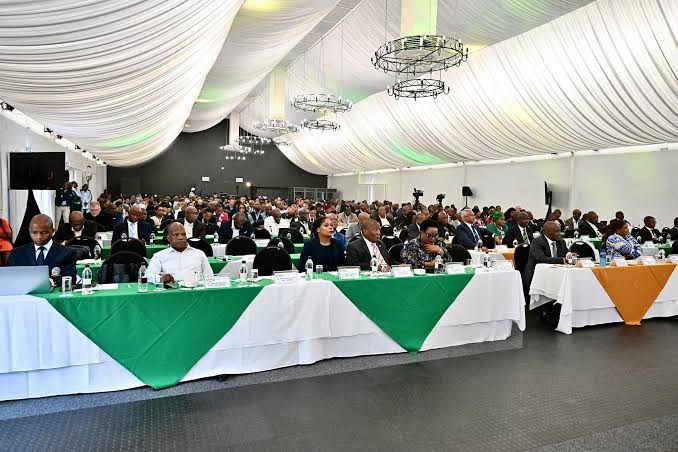
Premier Phophi Ramathuba’s launch address emphasised implementation and local value addition. The conference platform also describes structured due diligence and investor aftercare. These commitments deserve support and evidence of execution. We must examine whether investment promotion has functioned as a continuous delivery process or relied too heavily on the annual event.
Bankability and development alignment before acceptance
Before government accepts and promotes a pledge as a credible implementation commitment, I propose two admission tests. Passing one cannot compensate for failing the other.
The first is bankability and readiness. Review must establish a credible sponsor, technical feasibility, market demand, realistic costs and cash flows, and evidenced financing capacity. Land, infrastructure, approvals, environmental and social requirements, risks and delivery dates must be addressed. The DBSA’s project-preparation framework similarly assesses bankability, sponsor capacity, mandate fit and development impact, with risks allocated to appropriate parties.
The second is development alignment. A project must demonstrate how it advances the Constitution, the National Development Plan, the Limpopo Development Plan, relevant municipal integrated and local economic development plans, and applicable sector charters and gazetted codes. National and provincial planning already connects growth with reducing inequality and improving lives. Those objectives must become measurable project commitments.
Early concepts can enter a project-preparation pipeline. They should be labelled accordingly and reported separately from validated implementation pledges, financial close, capital actually invested and operating projects. An announcement must not blur these stages. A proposal that fails either admission test should not receive endorsement as a validated implementation commitment.
Accountability for accepted pledges
Acceptance should be a decision for which government is publicly answerable. It should mean that due diligence has been signed off, an accountable official is named, government’s own undertakings are authorised and resourced, and investor obligations are recorded. The parties need dated milestones, agreed risk allocation, monitoring, corrective action and enforceable remedies. Government must explain failures in its scrutiny, coordination and delivery.
That responsibility cannot mean taxpayers guarantee every private commercial loss. Financing, market and execution risks remain even after appraisal; natural disasters are only one source of uncertainty. Government must own its decisions and obligations, while investors remain answerable for theirs. Bankability is a disciplined assessment, not a guarantee of success.
“Government must own its decisions and obligations, while investors remain answerable for theirs.”
Public endorsement also has reputational value. A pledge can help a promoter attract attention, finance or partners before delivery is assured. This creates a risk of opportunistic pledging; verification, disclosure of financing conditions and time-limited endorsement can protect public credibility. Unmet milestones should trigger transparent review and, where warranted, withdrawal of endorsement.
The existing pledge portfolio needs the same discipline: review each commitment, explain its status, address remediable obstacles and publish cancellations or revisions. Neither repeated announcements nor unexplained removal from a register should count as progress.
Historical exclusion and economic transformation
Development alignment must begin with South Africa’s history. Segregation and apartheid excluded people from land, productive assets, skills and markets. The World Bank’s South Africa diagnostic identifies historical exclusion, skewed assets and weak competition as development constraints. Chatterjee, Czajka and Gethin estimate that the wealthiest 10% held about 86% of personal wealth during their 1993–2017 study period. These historical findings explain why growth alone cannot be assumed to broaden ownership.
Vilakazi and Bosiu connect racial transformation with removing entry barriers and building productive capabilities. This offers a stronger foundation than assuming investment automatically benefits everyone. International economics can inform our choices, but must account for who inherited assets, market access and bargaining power. History belongs inside the economic analysis.
Development priorities for government facilitated investment
Within the development test, I propose three priorities for government-facilitated investment. Section 9(2) of the Constitution supports measures advancing people disadvantaged by unfair discrimination. The following order is my proposed framework for accountability.
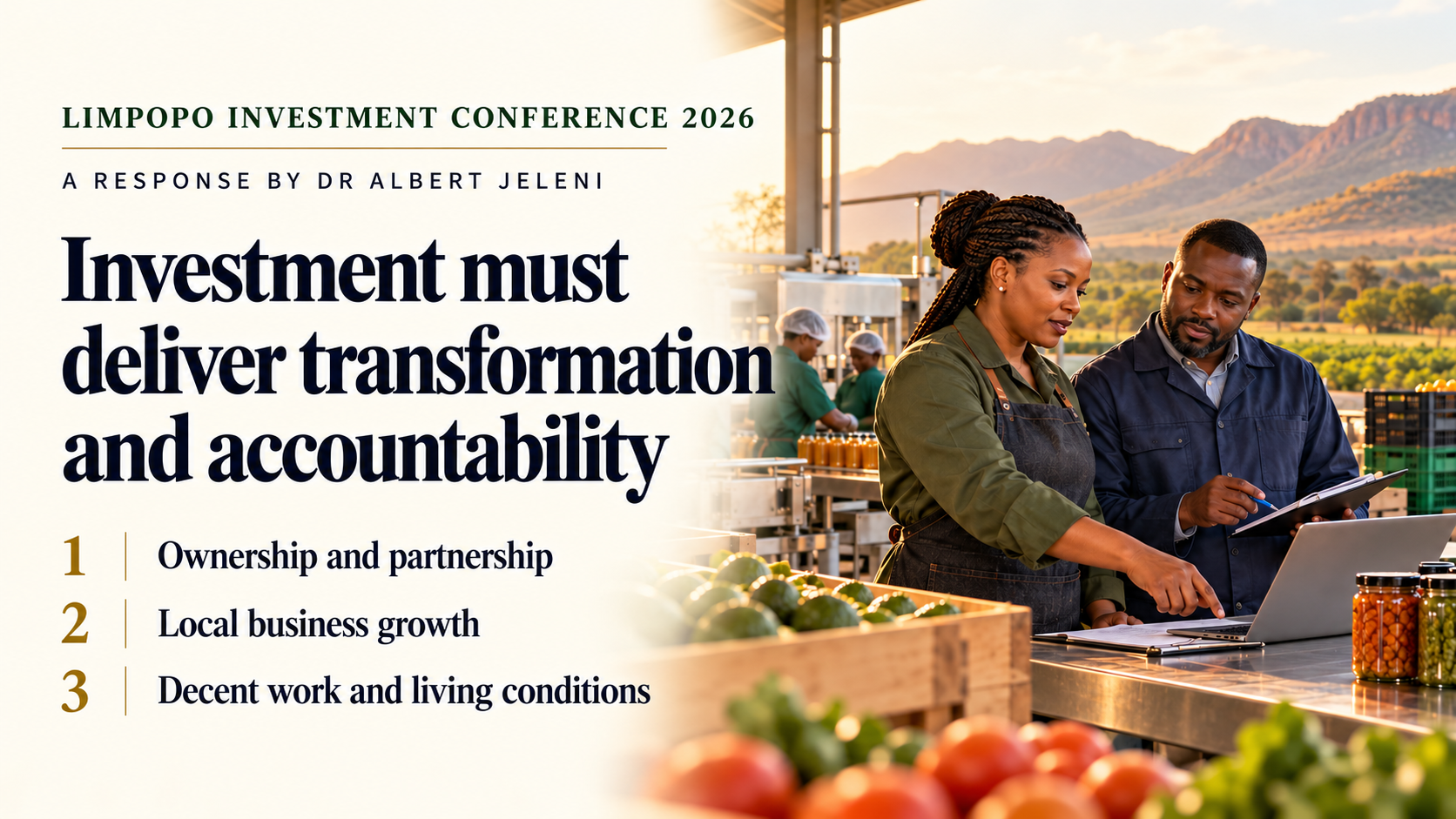
1Ownership and economic partnership
First, transformation and equality through meaningful black ownership and economic partnership. When government commits funding, guarantees, land or other material support, qualifying participation should be secured in the original bargain. Beneficiaries, contributions, voting rights and economic benefits must be clear. Section 10 of the B-BBEE Act already requires relevant codes to be applied in specified government decisions, including partnerships and investment schemes.
The applicable instrument determines what participation means. Shares, land ownership, joint ventures and recognised employee or community arrangements require careful structuring. Where 30% applies, the interest, beneficiaries and legal effect must be identified precisely. AgriBEE, for example, specifies a 30% land-ownership target. A measurement target, licence condition and contractual obligation are different. A supplier contract or lease cannot automatically replace a required ownership interest.
Ownership must produce value. Debt structures, weak control or benefits captured by a few connected people can hollow it out. Community land contributions need fair valuation and agreed rights. Nationally qualifying black ownership also does not by itself establish participation by the host locality; both questions need attention.
2Local enterprise growth
Second, inclusive growth through intentional, measurable opportunities for local businesses. Procurement commitments should specify purchasing opportunities, supplier-development support, finance and delivery dates. The Competition Commission’s May 2026 release, using 2017–2021 data, reports that MSMEs represented 97% of tax-registered firms but only 22% of turnover. Expanding their ability to enter markets and scale must be an explicit investment outcome.
The OECD finds that investment spillovers and local linkages do not arise automatically. Measure supplier revenue, productivity, local value added and customers beyond the anchor. Where commercially credible, plans should show how local firms could diversify and grow faster than the catalytic project, potentially becoming larger businesses themselves. This is an ambition to substantiate, not a guaranteed multiplier. Dependence on one buyer is a fragile outcome.
3Decent work and living conditions
Third, decent work and dignified living conditions. Assess sustained employment, real wages, transferable skills and progression, alongside housing, transport, health and environmental effects. All three priorities belong in the original agreement and require delivery from the outset. This order does not postpone labour rights or wellbeing; it prevents jobs and donations from substituting for structural participation.
Wages, housing and public services matter. Earnings can support saving, and a secure home is an asset. Research by Czajka and Gethin, covering 1993–2019, finds that fiscal redistribution reduced income inequality. Productive ownership adds rights to assets, returns and economic decisions that employment or donations do not automatically provide. Historically excluded people should participate as owners and producers as well as workers.
Investment risks reproducing colonial and extractive relationships when it uses local resources and public support while preserving exclusion and leaving communities dependent or bearing uncompensated costs. The test is the actual distribution of ownership, value and risk. Public facilitation should help change those relationships.
Public monitoring and implementation
Government should publish a pledge register showing validation status, investment actually realised against dated milestones, reasons for delay and responsible parties. Each materially supported project also needs a development scorecard: qualifying ownership and net value; local supplier growth; wages, jobs and living conditions; environmental outcomes; public contributions; and remedies for non-delivery. Protect justified commercial confidentiality while making public accountability possible.
Conditions must be lawful, predictable and commercially workable. Privately initiated projects without special public support have a different negotiating basis, while remaining subject to applicable law. Government-facilitated initiatives carry a particular responsibility to advance the public agenda for which that assistance is committed.
Conclusion
Limpopo should welcome investment with ambition and discipline. A successful conference should leave credible commitments backed by accountable delivery: what will our people own, which local businesses will become stronger, and how will ordinary households live better?
Dr Albert Jeleni
President of the Limpopo Chamber of Commerce and Industry and CEO of IfEDI Africa
Back to all News