LCCI to Drive Private-Sector Implementation of Limpopo–Zimbabwe Economic Cooperation Following ZNCC Annual Congress
Media Release — 30 June 2026
The Limpopo Chamber of Commerce and Industry (LCCI) has committed to converting its participation in the 2026 Zimbabwe National Chamber of Commerce (ZNCC) Annual Congress into a practical private-sector implementation programme between Limpopo and Zimbabwe.
Polokwane, 30 June 2026 — The Limpopo Chamber of Commerce and Industry (LCCI) has committed to converting its participation in the 2026 Zimbabwe National Chamber of Commerce (ZNCC) Annual Congress into a practical private-sector implementation programme between Limpopo and Zimbabwe.
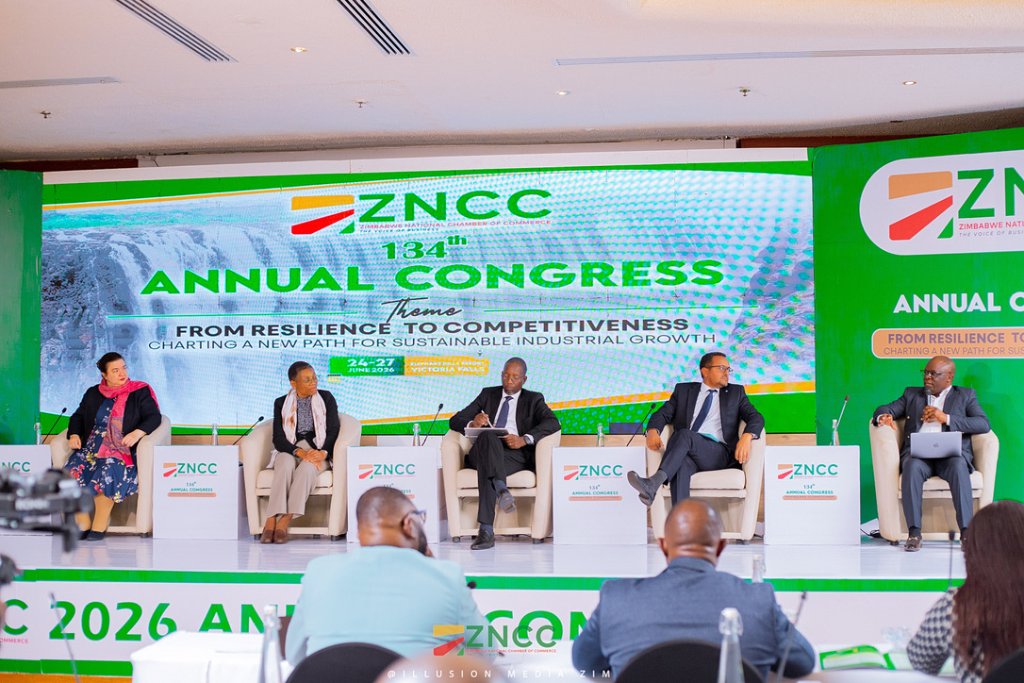
LCCI President, Dr Albert Jeleni, participated in a high-level AfCFTA implementation panel at the ZNCC Congress, held from 24 to 27 June 2026 at Elephant Hills Resort, Victoria Falls, under the theme: "From Resilience to Competitiveness: Charting a New Path for Sustainable Industrial Growth."
According to Observatory of Economic Complexity data, South Africa–Zimbabwe trade is valued at approximately US$5.2 billion, confirming South Africa as Zimbabwe's largest overall trading partner and a primary import origin that anchors over 38% of Zimbabwe's global inbound supply chain, supplying more physical goods to Zimbabwe than China and the entire European Union combined. This makes the Limpopo–Zimbabwe corridor a major commercial route that must be formalised, protected, expanded, and upgraded into stronger regional value chains. LCCI is therefore making three immediate commitments to move Limpopo–Zimbabwe cooperation from agreements to transactions:
- First, the Chamber will work with South African and Zimbabwean institutions to operationalise existing agreements into a practical transfrontier development corridor focused on production, market access, investment, logistics, tourism and manufacturing value chains.
- Second, LCCI will support the identification and pairing of at least three Zimbabwean and three South African companies to pursue practical commercial opportunities, including joint trading or production arrangements.
- Third, LCCI will promote structured private-sector consortia in both countries to explore, unlock and package catalytic opportunities that individual firms are too small or fragmented to pursue alone.
The timing is critical. The recent LEDA–ZimTrade platform, ongoing Beitbridge border modernisation, Vhembe–Beitbridge cross-border cooperation, the MMSEZ, AfCFTA implementation and regional trade-and-transport facilitation frameworks create a strong operational basis for practical Limpopo–Zimbabwe cooperation.
LCCI remains concerned that informal, illicit and under-declared trade linked to the corridor may be far larger than the formal ledger suggests, with some assessments estimating the shadow economy at up to US$1.5 billion annually. While this figure requires joint verification, the conclusion is clear: illicit trade weakens legitimate businesses, reduces tax revenue, distorts competition and damages regional integration.
This concern is supported by a 2024 United Nations policy paper noting that Africa loses an estimated US$88.6 billion annually to illicit financial flows, equivalent to 3.7% of Africa's GDP. For LCCI, the response cannot be enforcement alone. The South African and Zimbabwean private sectors must collaborate to convert informal but legitimate trade into formal channels while jointly confronting customs fraud, smuggling and counterfeit goods.
The corridor also carries continental significance. The AfCFTA brings together a market of about 1.3 billion people with a combined GDP of approximately US$3.4 trillion. Full implementation is expected to increase Africa's income by 7% by 2035, while intra-African exports could grow by up to 81% under accelerated implementation.
The logistics argument is equally strong. South Africa accounts for 19.2% of intra-African trade, while road transport carries over 80% of freight and passenger traffic movements in SADC. Limpopo freight data confirms the N1 as the critical corridor linking Gauteng, Limpopo and Zimbabwe, with Beit Bridge Traffic Control Centre data showing that 65% of observed freight was destined across South Africa's borders. With Beitbridge clearing around 750 trucks daily and recognised as Southern Africa's busiest border, the Musina–Beitbridge corridor is not merely a provincial route; it is a strategic transfrontier artery for SADC and AfCFTA implementation.
LCCI welcomes signs of improving macro-financial stability in Zimbabwe, with growth expected to moderate to about 5% in 2026 following a 6.6% recovery in 2025. This momentum, supported by agriculture, mining and tighter monetary policy, improves cross-border contracting, trade finance and investment planning. The task now is to convert this stability into execution through policy consistency, efficient logistics, reliable energy, digital payments and long-term capital.
Dr Jeleni emphasised that LCCI's role is to convert regional goodwill into measurable business outcomes. "AfCFTA will not be implemented by speeches. It will be implemented by private-sector firms that find markets, meet standards, move goods, access finance, partner across borders and build value chains. Limpopo and Zimbabwe have enough agreements, enough history and enough economic logic. The missing link is disciplined implementation," said Dr Jeleni.
He added that chambers must move beyond general advocacy: "Private sector cannot only complain about barriers. We must identify opportunities, quantify bottlenecks, organise firms, build consortia, match companies and track results. The next phase of chamber work must be evidence-driven, transaction-focused and implementation-led."
Dr Jeleni further noted that LCCI's partnership with the Institute for Economic Development and Innovation Africa (IfEDI Africa) will be extended to support practical cooperation with ZNCC. This includes professionalising economic development practice, strengthening trade intelligence, improving education-to-industry linkages and building compatible cross-border business capabilities. Stronger cooperation requires standardised data and skills pathways, and reliable business intelligence to reduce trade friction. This agenda will be advanced through IfEDI's flagship African Conference on Economic Development and Innovation (ACOEDI 2026), taking place from 1–4 September 2026 at the Emperors Palace Convention Centre in Johannesburg. Details are available at www.ifedi.org/acoedi.

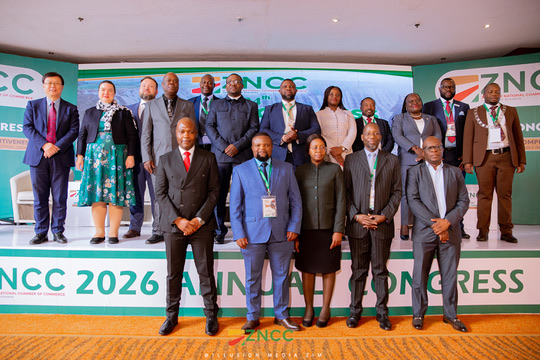
LCCI congratulates Mrs Josephine Takundwa on her inauguration as President of the ZNCC, and Dr Gerald Zhou as Deputy President. LCCI also extends appreciation to Mr Christopher T. Mugaga, Chief Executive Officer of ZNCC, and to the outgoing President, Mr Tapiwa D. Karoro, for their leadership in convening a Congress that placed private-sector leadership, competitiveness and regional cooperation at the centre of the agenda. LCCI looks forward to working with the new leadership and the ZNCC Secretariat to deepen enterprise cooperation between South African and Zimbabwean businesses.
LCCI will now engage relevant stakeholders in both countries to translate these commitments into a practical work programme. The LCCI's position is clear: Limpopo–Zimbabwe cooperation must be judged by transactions unlocked, value chains strengthened, jobs supported and trade flows increased.
More photos from the ZNCC Annual Congress are available on Facebook: https://www.facebook.com/share/p/193SnPk4vR/
ISSUED BY Dr Albert Jeleni
President of the LCCI & President of NUMCCI
065 924 3925
Photo Gallery
More photos from the ZNCC Annual Congress are available on Facebook: https://www.facebook.com/share/p/193SnPk4vR/
For More Information
Contact the Limpopo Chamber of Commerce and Industry
Organisation: Limpopo Chamber of Commerce and Industry
Email: President@limpopochamber.org.za
Tel: 076 773 7460 / 065 924 3925